Apr 3, 2026
How to Choose Custom Promotional Products for Client Gifts
Introduction
Picture this: A business professional receives two vendor gifts in the same week. The first is a flimsy plastic pen with a logo so large it screams "advertisement." It's tossed in a drawer within hours. The second is a sleek, insulated tumbler that keeps morning coffee hot and fits perfectly in a car cup holder. It becomes a daily essential, and every time it's used, the sender's brand stays top of mind.
This scenario plays out thousands of times daily in offices across the country. The difference between the two gifts isn't price — it's intentionality.
Client gifts serve two purposes at once: they build relationships and extend your brand. Research from PPAI shows that 90% of consumers say receiving a promotional product improves their perception of the brand, and 83% feel genuinely appreciated.
A poorly chosen gift can flip that dynamic entirely — signaling that you don't understand your clients or that your brand cuts corners on quality.
This guide walks through the criteria that separate memorable client gifts from forgettable ones — so every dollar you spend works harder for your brand.
Key Takeaways
- Quality and relevance matter more than quantity—choose gifts clients will actually use.
- Effective client gifts balance practical utility with subtle brand alignment.
- Match budget to relationship value: roughly $5–$15 for general appreciation, $20–$50 for regulars, $75+ for VIPs.
- Personalization transforms branded products from marketing pieces into genuine gestures.
- Timing matters—gifts tied to milestones or anniversaries land better than a flood of holiday-only sends.
Promotional Products vs. Client Gifts: Why the Distinction Matters
Not all branded merchandise serves the same purpose, and understanding that difference leads to smarter buying decisions.
These two categories serve fundamentally different goals:
- Promotional items are distributed broadly to generate brand awareness — custom pens at trade shows, branded tote bags at conferences, logo koozies at community events. The goal is maximum reach at minimal cost per impression.
- Client gifts are targeted, intentional gestures meant to strengthen a specific business relationship. The recipient already knows your company; the gift's job is to deepen that connection.
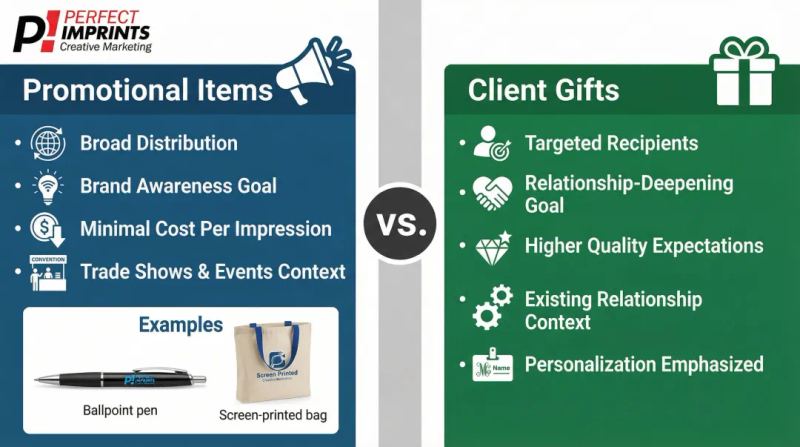
This distinction drives everything from budget to product selection. Client gifts carry higher expectations because they're given to people your business already has a relationship with — the bar for quality, relevance, and thoughtfulness rises accordingly.
A poorly chosen client gift can feel impersonal or even tone-deaf, signaling that the relationship wasn't worth genuine consideration.
Branded client gifts aren't mutually exclusive with promotional strategy — they should carry your logo and messaging. But the branding must feel secondary to the gift's usefulness and quality, not the other way around. The best client gifts happen to be branded; they're not branded items masquerading as gifts.
How to Choose Custom Promotional Products for Client Gifts
Choosing the right client gift means matching product, budget, and timing to the specific relationship. These factors apply across industries, but their weight shifts depending on whether you're gifting a long-term enterprise client, a new prospect, or a seasonal thank-you recipient.
Know Your Client's Interests and Lifestyle
Relevance to the recipient drives whether a gift gets used daily or discarded. A gym enthusiast values a branded water bottle far more than a generic desk calendar. A real estate agent constantly on the go benefits more from a high-quality branded messenger bag than stationery that sits on a shelf.
Practical methods to understand clients better before selecting gifts:
- Review their LinkedIn profiles for hobbies and interests
- Ask account managers to note personal details from conversations
- Observe their workspace during meetings (photos, sports memorabilia, coffee preferences)
- Track industry-specific needs (construction clients need durable gear, tech clients appreciate innovation)
Small details gathered over time build a profile that makes gift selection specific, not generic.
Match the Gift to Your Brand Identity
A client gift is a direct extension of your brand's personality. A tech startup sending branded wireless chargers reinforces innovation and modernity—38% of consumers view brands as modern and relevant after receiving tech items. A law firm sending premium leather notebooks reinforces professionalism and attention to detail.
Align these elements with your brand voice:
- Pick product categories that reflect your industry and core values.
- Match product aesthetics—minimalist, bold, or traditional—to your visual identity.
- Keep logo placement subtle on premium gifts; go bolder for broad awareness campaigns.
- Apply brand colors consistently across the product and its packaging.
- Make sure any typography on the product aligns with your brand guidelines.
Custom imprinting options aren't just decoration—they're essential tools for brand alignment. Working with a supplier like Perfect Imprints, which offers screen printing, embroidery, and laser engraving across multiple product categories, gives you the flexibility to maintain brand consistency regardless of the item chosen.
Set a Budget Based on Relationship Value
A tiered budgeting approach makes sense for most businesses and signals the right level of appreciation:
- $5–$15: General client appreciation, new relationships, seasonal thank-yous
- $20–$50: Regular clients, mid-tier accounts, project completions
- $75+: VIP relationships, top-revenue clients, multi-year partnerships
The right spend reflects the relationship's value. But here's the counterintuitive truth: cost-per-impression matters more than upfront cost. A $30 branded item used daily for two years delivers far better ROI than a $5 throwaway. According to ASI's 2023 Ad Impressions Study, promotional products offer CPIs as low as one-tenth of a cent, with quality items like insulated mugs costing just one-third of a cent per impression.
Prioritize Functionality and Daily Usability
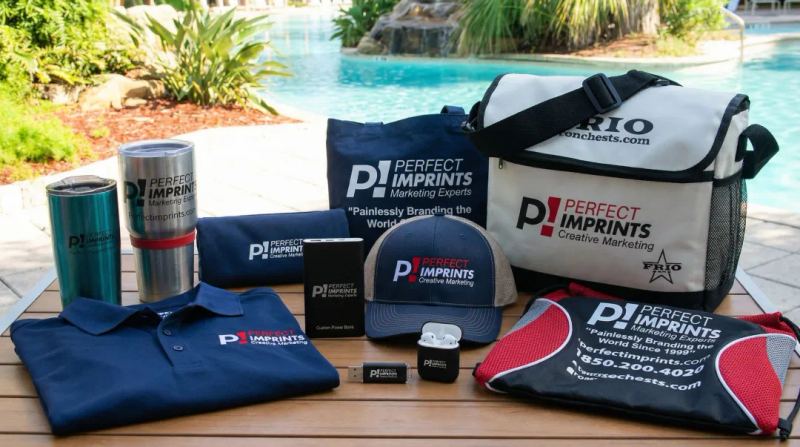
The most effective client gifts are things recipients will actually use in their daily routines. Items like custom drinkware, branded tech accessories, and personalized tote bags get repeated exposure and keep your brand top-of-mind. Novelty items often end up forgotten in drawers.
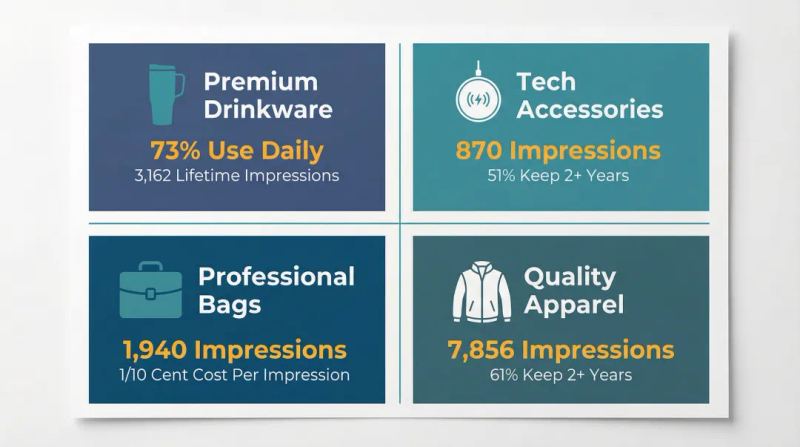
Research shows that 78% of consumers keep a promotional item because it's useful, and 80% now prioritize practicality when evaluating branded merchandise. High-utility categories that drive retention:
- Premium drinkware (73% use branded bottles/tumblers daily)
- Tech accessories (power banks, wireless chargers, quality earbuds)
- Professional bags (laptop cases, structured totes, messenger bags)
- Quality apparel (embroidered polos, soft-shell jackets)
Consider Personalization and Customization Options
Personalization turns a good gift into a memorable one. Adding a client's name, company name, or a handwritten note transforms a branded product from a marketing piece into a genuine gesture of appreciation. 48% of consumers say personalization makes a product more memorable.
Understand the difference:
- Customization: Your logo, colors, and tagline on the product (brand-focused)
- Personalization: Client-specific details like names or messages (recipient-focused)
The best client gifts combine both—custom enough to represent your brand, personal enough to feel made for that specific recipient. A branded notebook with the client's name embossed on the cover hits both marks perfectly.
Plan for Timing and Delivery Logistics
Timing matters strategically. Client gifts sent around project milestones, contract anniversaries, or mid-year appreciation—rather than only December holidays when every competitor is also sending gifts—tend to stand out more and feel more intentional.
Lead time planning is critical. Rushing an order can compromise quality or limit customization options. Standard production runs 5–7 days, with rush options at 3 days and some suppliers offering 1-day turnaround on qualifying items.
For bulk orders with unique imprinting, plan 4–6 weeks ahead. That buffer covers quality control, proof approval, and on-time delivery without last-minute compromises.
Top Custom Promotional Products to Give Clients
The best choices vary by industry and client profile, but the following categories consistently perform well because they combine practical value with strong brand impression potential.
Premium Drinkware
Branded drinkware ranks among the most effective client gift categories for good reason. Nearly 73% of consumers use branded bottles or tumblers daily, generating 3,162 impressions over the item's lifetime, with 63% keeping and using them for at least one year.
Recipients use quality drinkware multiple times per day. It's visible in offices, homes, cars, and gyms. A quality piece signals that your brand prioritizes craftsmanship and understands what clients actually need.
What to look for when selecting branded drinkware:
- Double-wall vacuum insulation that keeps drinks hot or cold for hours
- Leak-proof lids that hold up during commutes and travel
- Stainless steel construction that outlasts plastic over years of daily use
- Laser engraving or quality screen printing that stays sharp wash after wash
Budget matters here. A flimsy mug that leaks or loses insulation undercuts the gift's message. Invest in quality—the difference between a $10 basic mug and a $25 premium tumbler pays dividends in daily use and brand perception.
Tech Accessories
Tech accessories solve real daily problems, carry a high perceived value, and keep your brand visible on desks and in bags throughout the workday.
Popular options include wireless chargers, power banks, USB hubs, and quality earbuds. Research shows 38% of consumers view brands as modern and relevant after receiving tech items. Power banks alone generate 870 impressions over their lifetime, with 51% of recipients holding onto them for at least two years.
Tech gifts work best for clients in corporate, financial, healthcare, or professional services—segments where digital productivity drives daily work. A branded wireless charger on a client's desk delivers utility every time their phone needs a charge.
Quality Apparel and Bags
Premium branded apparel or bags—such as embroidered polos, high-quality jackets, or structured tote bags—work especially well for clients who interact with the public. Real estate agents, construction companies, and association members benefit from items they can use professionally while simultaneously marketing your brand to others.
Outerwear generates an impressive 7,856 impressions over its lifetime, with 61% of recipients keeping and wearing it for at least two years. Bags generate 1,940 impressions with 43% retention for two-plus years, all at a cost-per-impression of just one-tenth of a cent.
Critical success factor: Quality must be genuinely good. Fabric, stitching, and construction matter. Recipients won't wear or carry items that look cheap or feel uncomfortable, no matter how well-placed the logo. The goal is an item the recipient chooses to wear because they like it, not one they tolerate because it's free.
Curated Gift Sets
A curated branded gift set combines two or three smaller items into a cohesive, branded package. Pairing a branded notebook, quality pen, and insulated tumbler increases perceived value without proportionally increasing cost. It also creates an "unboxing" moment that feels more special than a single item.
This approach is especially effective for new client onboarding, milestone celebrations, or year-end appreciation. Coordinating the packaging—boxes, tissue paper, ribbon in brand colors—adds an additional layer of polish that clients notice and remember.
Implementation tip: Choose items that complement each other functionally. A few proven combinations:
- Tech set: wireless charger, power bank, and cable organizer
- Professional set: leather padfolio, premium pen, and desk accessory
- On-the-go set: an insulated tumbler, a branded tote bag, and a portable charger
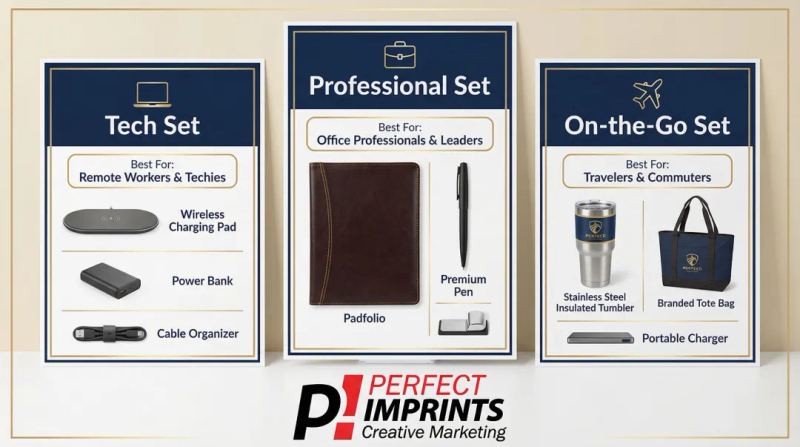
That cohesion signals thoughtfulness—and the impression sticks.
How Perfect Imprints Can Help You Create Client Gifts That Leave a Lasting Impression
Perfect Imprints is a full-service custom promotional products and corporate gifting supplier whose tagline—"Custom Promotional Products & Corporate Gifts With Your Logo"—captures what client gift programs require: products that are branded, quality-controlled, and purpose-built to represent a business professionally.
From apparel and drinkware to tech accessories, bags, and office supplies, Perfect Imprints eliminates the need to juggle multiple vendors to build a cohesive client gift program. Decoration methods include:
- Silk screen printing
- Embroidery
- Laser engraving
- Full-color digital printing
- Heat transfer
This range gives you the flexibility to match the right technique to each product and brand requirement.
Perfect Imprints serves businesses across real estate, healthcare, banking, education, nonprofits, construction, and government. That breadth of experience translates into practical guidance—understanding the gifting contexts, compliance considerations, and audience preferences that differ by industry.
Financial services clients, for instance, need to stay within regulatory gift limits. Healthcare organizations must navigate PhRMA Code restrictions. Having a supplier familiar with those constraints helps you avoid missteps and select products that fit both your brand and your industry's rules.
Interested businesses can reach Perfect Imprints at +1 850-200-4020, Monday through Friday, 8AM–5PM, to discuss their specific client gifting needs and explore product options tailored to their brand and budget.
Conclusion
Choosing a custom promotional product for a client gift is a decision about what message you want to send about your business. The best client gifts are useful, well-made, brand-aligned, and chosen with that specific recipient in mind. Done right, they become daily-use items that keep your brand visible long after the gift is given.
A few things worth keeping in mind as you finalize your approach:
- Start the selection process early — especially for high-volume or end-of-year gifting
- Segment by client tier and occasion rather than sending the same item to everyone
- Prioritize products that fit your clients' actual daily routines, not just what looks good in a catalog
Working with a supplier like Perfect Imprints takes the guesswork out of that last step — matching the right product, imprint method, and quantity to your specific gifting goals.
Frequently Asked Questions
Promotional items are mass-distributed for general brand awareness — think custom pens at trade shows or branded tote bags at conferences. Client gifts are targeted, relationship-specific gestures where quality and personal relevance matter more than volume. Both can carry your branding, but client gifts put the recipient's needs first.
Match gift value to relationship depth, avoid anything too personal or potentially offensive, and be mindful of industry compliance rules. Financial services firms must follow FINRA's $300 per person annual limit, while federal employees face a $20 per occasion cap. Always include a personalized note to make the gesture feel intentional rather than transactional.
The most consistently used promotional products are everyday-use items: custom drinkware, quality pens, branded tote bags, and personalized tech accessories. Studies consistently show that usefulness is the top reason consumers hold onto branded merchandise — practicality drives both retention and brand recall.
A tiered approach works best: $5–$15 for general appreciation, $20–$50 for regular clients, and $75+ for top-tier or VIP relationships. Perceived quality and relevance matter more than the dollar amount. A $30 item used daily for two years consistently outperforms a $5 item that gets discarded after a week.
Subtle, tasteful branding typically works better than large, prominent logos on client gifts. The goal is brand association through usefulness, not visibility through size. High-quality items with a small, well-placed logo tend to get used more frequently and reflect better on the gifting company than items where branding overwhelms utility.
Read Related Blogs
Custom Branded Merchandise Ordering Guide: Complete Guide
Master custom branded merchandise ordering with our complete guide. Plan orders, choose products, pick decoration methods, and avoid costly mistakes. Start today!
Screen Printing on Promotional Products: Complete Guide
Master screen printing on promotional products. Learn how it works, which items qualify, costs, and when to choose it over other decoration methods.

Best Eco-Friendly Corporate Gifts for Client Appreciation
Discover the best eco-friendly corporate gifts for client appreciation. Explore sustainable options that impress clients while reflecting your brand values.