Apr 3, 2026
Custom Branding for Small Businesses: Complete Guide
Most small business owners know they need branding — but many confuse it with simply having a logo. In reality, custom branding is the complete experience customers have with your business, from the colors on your website to the branded tote bag they carry home. 78% of small business owners report that visual branding plays a significant role in revenue growth, yet many still approach it piecemeal, creating inconsistent touchpoints that dilute their message.
Branding is especially powerful for small businesses because it levels the playing field. A thoughtfully branded local firm can compete with national chains, build trust faster, and transform one-time buyers into loyal advocates. This guide walks you through the complete branding process — from defining your brand strategy and building a visual identity to selecting physical branded materials and maintaining consistency across every customer interaction.
Key Takeaways
- Custom branding covers your full business identity: strategy, visuals, voice, and every touchpoint customers encounter.
- Brand strategy — mission, values, positioning — must be defined before making any design decisions.
- A complete visual identity includes logo, color palette, typography, and imagery guidelines.
- Physical branded materials like promotional products and printed collateral create the most memorable brand experiences.
- Consistent branding across all platforms increases revenue by 23% to 33%.
What Is Custom Branding and Why It Matters for Small Businesses
Custom branding is the intentional, tailored process of building a distinct identity — visual, verbal, and physical — that reflects your business's values and resonates with your specific audience. Unlike generic off-the-shelf templates, custom branding is purpose-built for your market position, target customers, and competitive landscape.
The numbers back it up: companies maintaining consistent brand presentation across all platforms see revenue increases of 23% to 33%. Yet 77% of organizations still produce off-brand content, missing measurable growth in the process.
Small and medium businesses actually have the most to gain from strategic branding. Brand strength accounts for up to 30% of total revenue, and for smaller operations, a strong identity does three things that advertising alone can't:
- Competes against larger players without matching their budget
- Commands premium pricing by reducing direct price comparisons
- Prevents products and services from becoming commoditized
Start With Strategy: Building Your Brand Foundation
Brand strategy has to come before any design decisions. Your logo, colors, and physical materials are expressions of that strategy. Without it, visual choices become arbitrary and inconsistent.
Define Your Mission, Vision, and Values
These three elements form the "why" that everything else radiates from:
- Mission — Why you exist today and what you do for customers
- Vision — Where you're headed and what future you're building
- Core values — The principles guiding every decision, hire, and customer interaction
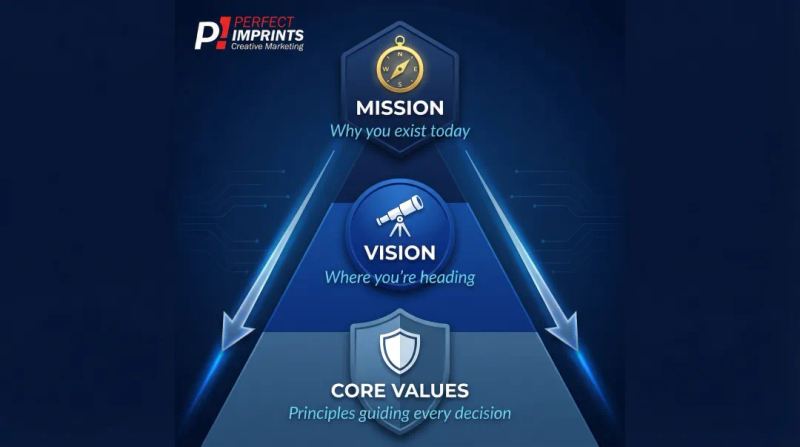
For small businesses, defining these helps align your team, attract the right customers, and stay consistent as the business grows. They're decision-making frameworks — not marketing copy.
Know Your Target Audience
Define your target audience through customer research: identify demographics, pain points, motivations, and buying behavior. Speaking to everyone means connecting with no one.
Low-cost research tools small businesses can use:
- Google Trends — Free keyword and seasonal trend discovery (note: data limited to rolling 5-year window)
- Social Searcher — Privacy-friendly social media search across major networks without registration
- Talkwalker Alerts — A free alternative to Google Alerts for tracking brand mentions across blogs, forums, and social media.
- Competitor comment sections — Direct insight into customer pain points and language.
Develop Your Brand Positioning
Brand positioning defines how customers perceive your business relative to competitors. It includes your unique value proposition, key brand messages, and the specific problem you solve better than anyone else.
Harvard Business School's positioning framework offers a practical template: "For [target market], our brand is the only one among all [competitive set] that [unique value claim or primary point of difference] because [reasons to believe]."
A sharp positioning statement is the single most important strategy document a small business can create. It guides every marketing message, design decision, and customer interaction going forward.
The Essential Visual Identity Elements for Small Businesses
Once the strategy is locked, visual identity translates that strategy into a recognizable, consistent look and feel. Every small business needs these five core elements.
Logo Design
A strong small business logo requires simplicity, versatility across applications (from business cards to branded merchandise), and relevance to the brand's personality. Your logo should work in black-and-white, at small and large scales, and across both print and digital formats.
Minimum size requirements: Never display logos smaller than 30-40mm in print or 70-110 pixels on-screen to maintain legibility and impact.
Color Palette
Colors trigger specific emotions and shape how customers perceive your brand. Research shows color directly influences purchase intent and brand familiarity, mapping hues to personality dimensions like "exciting red and competent blue."
Best practice: Select 1 primary color and 1 secondary color to represent your brand, supplemented by dark and light variants for flexibility. This 2-3 color approach ensures harmonious design and accessible text across applications.
Typography
Typography conveys tone and personality before a single word is read. Define 1-2 font pairings (a heading font and a body font) and use them consistently across all materials — digital and print alike.
Best practice: Lock your font choices in your brand guide early — consistent typography is one of the fastest signals of a credible, established business.
Imagery and Visual Style
Define an imagery palette: the types of photos, illustrations, or graphic styles that align with your brand's personality. Consistency in imagery style — lighting, tone, subjects, composition — makes a brand feel cohesive even without the logo present.
Brand Style Guide
A brand style guide documents your logo, colors, typography, and imagery rules so that freelancers, vendors, and new hires can all produce on-brand work without guesswork. It doesn't need to be elaborate; even a one-page reference document is better than nothing.
Include at minimum:
- Logo usage rules and minimum sizes
- Color codes (HEX, RGB, CMYK)
- Typography specifications
- Imagery guidelines
- Tone of voice examples
Bringing Your Brand to Life With Physical Branded Materials
Physical touchpoints often create the most memorable brand experiences — people can touch, keep, and share them. For small businesses that interact with customers in person or at events, branded physical materials are a consistently effective branding tool that many small businesses overlook.
Essential Print Collateral
Must-have printed materials for small businesses include business cards, letterhead, brochures, and flyers. These should all use the same logo, colors, and typography defined in your style guide for instant brand recognition.
Consistency across print collateral signals professionalism and attention to detail — qualities customers associate with your products or services.
Branded Promotional Products
Branded promotional products — custom pens, custom tote bags, custom apparel, custom mugs, custom drinkware — extend brand visibility beyond the transaction and create goodwill. 65% of consumers keep high-quality branded items for 6+ months, and 66% can name the advertiser on a logoed product they received in the past year.
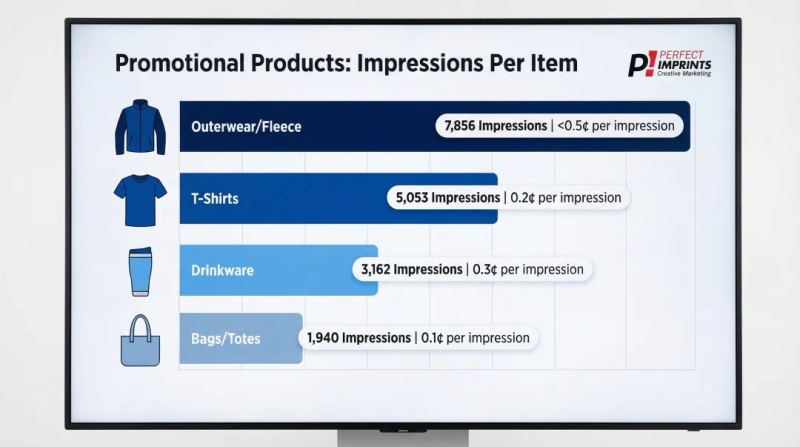
ROI data demonstrates promotional products' efficiency:
| Item | Lifetime Impressions | Cost Per Impression |
|---|---|---|
| Outerwear/Fleece | 7,856 | < 0.5 cents |
| T-Shirts | 5,053 | 0.2 cents |
| Drinkware | 3,162 | 0.3 cents |
| Bags/Totes | 1,940 | 0.1 cents |
The most effective promotional products are relevant to the audience's daily life — branded water bottles for healthcare or fitness businesses, branded notebooks for financial services firms, or custom tote bags for retail brands.
Companies like Perfect Imprints specialize in custom promotional products and corporate gifts featuring your logo, making it easier to source everything from screen-printed apparel to branded merchandise in one place.
Custom Apparel and Uniforms
Branded apparel — custom T-shirts, custom polo shirts, custom caps — serves dual purposes: it creates team cohesion and makes employees visible representatives of your brand wherever they go. For service industries like construction, healthcare, or real estate, uniforms with a logo establish professionalism and trust instantly.
Apparel also works as promotional merchandise for events, fundraisers, and community initiatives, extending brand reach beyond your immediate customer base.
Packaging and Event Materials
Branded packaging (custom bags, custom boxes, custom tissue paper) and event materials (banners, table covers, signage) reinforce identity at every customer interaction — especially at trade shows, community events, or in-store experiences. The unboxing or event experience can generate social sharing and word-of-mouth when the design is strong.
Brand Collateral for Specific Industries
Branded materials should fit your industry and audience:
- Real estate firms — Branded notepads, yard signs, and closing gifts like embroidered tote bags printed with the buyer's new zip code
- Churches and non-profits — Custom apparel for volunteers and supporters so supporters become visible advocates in their communities
- Microbreweries — Branded glassware and packaging that reinforce brand identity at every pour
Effective branding varies by sector, but the principle stays: every touchpoint should reinforce your identity.
Maintaining Brand Consistency Across All Channels
Brand consistency means using the same logo, colors, fonts, imagery, and tone of voice across every customer touchpoint — website, social media, email, physical materials, and in-person interactions — so customers recognize your brand at every touchpoint, building familiarity and trust over time.
Key channels requiring consistency:
- Website, social media profiles, Google Business Profile, and email templates
- Business cards, brochures, storefront signage, and vehicle wraps
- Uniforms, packaging, event displays, and branded promotional products
Run periodic brand audits to catch inconsistencies before they erode trust. Review all customer-facing materials against your brand style guide using a simple checklist:
- Logo usage and sizing
- Color accuracy across print and digital
- Font compliance
- Tone and messaging alignment
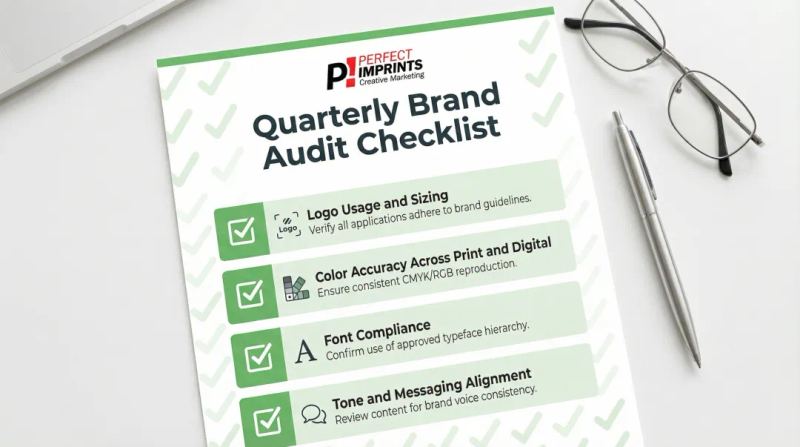
Even a one-person team can stay consistent with a quarterly review.
Budget-Friendly Branding Tips for Small Businesses
The costliest branding mistake small businesses make is skipping strategy to save money — then spending far more later to fix inconsistent visuals or unclear messaging. A tight budget doesn't prevent strong branding; poor planning does.
Invest in strategy first. Build your materials over time from that foundation.
Practical Low-Cost Branding Actions
Immediate steps you can take:
- Create a basic style guide using free tools (note: Canva's free tier limits you to 1 brand kit with 3 colors and 1 logo — no custom fonts)
- Set up and fully complete your Google Business Profile with consistent branding
- Establish a consistent social media brand voice across all platforms
- Order a small quantity of professionally printed business cards or branded promotional items as initial touchpoints
Where to Spend vs. Where to Save
| Priority | What It Covers |
|---|---|
| Spend on | Logo and style guide — foundational assets that are costly to change later |
| Save on | Elaborate brand campaigns until the foundation is solid |
One practical cost-reduction move: working with a single supplier for print, promotional products, and design keeps messaging consistent and often lowers per-unit pricing.
Marketing Budget Guidelines
The U.S. Small Business Administration recommends businesses with revenues under $5 million allocate 7-8% of revenues to marketing, assuming margins in the 10-12% range. Gartner's 2025 data shows average marketing budgets have flatlined at 7.7% of company revenue.
Within that budget, foundational branding should come before performance marketing. Branded touchpoints — business cards, apparel, promotional items — often deliver the highest visibility per dollar spent, especially for businesses building local recognition from scratch.
Frequently Asked Questions
DIY branding can cost very little using free tools, while hiring a professional agency typically starts in the hundreds of dollars and scales upward based on scope. A common guideline is to allocate 5-10% of revenue toward marketing (including branding), with exact amounts depending on business stage and growth goals.
The 3-7-27 rule describes brand awareness stages: roughly 3 impressions for recognition, 7 to be remembered, and 27 to build trust. That's why showing up repeatedly — through branded merchandise, signage, social media, and follow-up — is more effective than a single campaign.
The 60/40 rule suggests allocating approximately 60% of marketing efforts to long-term brand building and 40% to short-term performance or sales activation. This framework, backed by extensive IPA research, helps small businesses balance immediate revenue goals with sustained brand growth.
The 3-3-3 rule focuses on capturing a prospect's attention within the first 3 seconds, communicating your core value in 3 sentences, and guiding them to a 3-step action — making it especially practical when designing ads, landing pages, or sales pitches.
The 5 C's cover every layer of how a brand shows up and earns loyalty:
- Clarity — your messaging is easy to understand at a glance
- Consistency — your brand looks and sounds the same wherever customers find you
- Credibility — you deliver on what you promise, building trust over time
- Connection — customers feel something when they encounter your brand
- Customer Experience — every interaction reinforces the brand, not just the marketing
The 5 P's guide how a brand is built and communicated:
- Purpose — the reason the business exists beyond making money
- Positioning — what makes it the better choice over competitors
- Personality — the tone, voice, and character that make it recognizable
- Perception — how customers actually see and describe the brand
- Promotion — the channels and tactics used to communicate its identity
Read Related Blogs
Best Custom Branded Tote Bags for Trade Shows: Complete Guide
Discover the best custom branded tote bags for trade shows. Compare top styles, materials, and design tips to maximize brand visibility on the show floor.
Custom Branded Merchandise Ordering Guide: Complete Guide
Master custom branded merchandise ordering with our complete guide. Plan orders, choose products, pick decoration methods, and avoid costly mistakes. Start today!
Top Custom Apparel Providers for Small Business in 2026
Discover the top custom apparel providers for small businesses in 2026. Compare print-on-demand, embroidery, and bulk printing services to find your best fit.