Apr 3, 2026
Best Custom Branded Tote Bags for Trade Shows: Complete Guide
Introduction
Trade shows are battlegrounds for attention. In a sea of identical pop-up banners and polished pitch decks, branded giveaways shape attendee perception in seconds—and custom tote bags work harder for brand visibility than any other swag item. They're used immediately, carry other vendors' materials throughout the venue, and extend your brand's reach far beyond the show floor.
That value only holds if you make the right choices upfront. Choosing the wrong style, material, or print approach results in bags that get discarded, distort logos under load, or fail to carry branding effectively. The difference between a branded tote that ends up in a hotel trash can and one that becomes a daily commuter staple comes down to four decisions: material, capacity, print method, and design strategy.
Key Takeaways
- Custom branded tote bags generate 1,940 impressions per bag at just 1/10 of a cent per impression—outperforming digital ads.
- Five bag styles dominate trade shows: canvas, non-woven poly, gusseted cotton, laminated, and zip-top structured.
- Match your bag to your budget, audience, and print method before placing a bulk order.
- Bold, single-mark logo placement on the front panel in high-contrast colors delivers maximum readability on busy show floors.
Why Custom Branded Tote Bags Are Trade Show Essentials
Custom branded trade show tote bags are reusable promotional bags printed or embroidered with a company logo, designed to carry brochures, samples, and swag during events. They solve an immediate attendee problem—managing heavy materials across sprawling convention centers—while simultaneously putting your brand in front of every person who walks past.
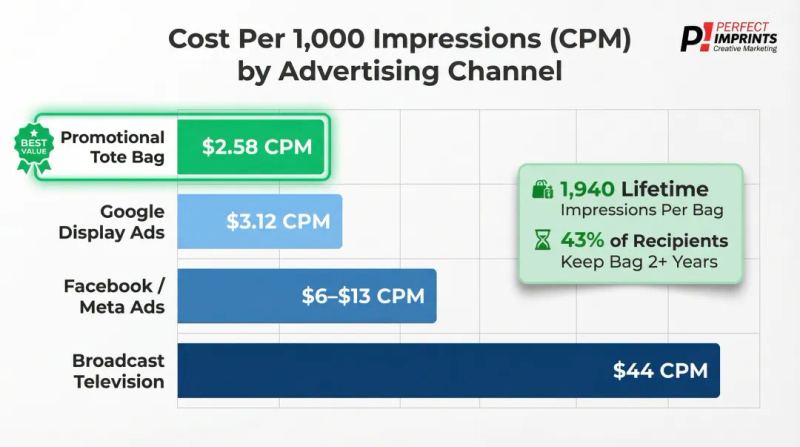
The ROI is measurable. According to the ASI 2023 Ad Impressions Study, a single promotional bag generates 1,940 impressions over its lifetime, and 43% of consumers keep and use a promotional bag for at least two years. Compare that to digital advertising: a $2 non-woven tote delivers a cost-per-thousand impressions (CPM) of $2.58—cheaper than Google Display ($3.12), Facebook ads ($6–$13), and broadcast TV ($44).
Tote bags also forge emotional connections. Research shows that 83% of consumers feel appreciated when receiving a promotional product, and 72% associate branded merchandise with positive emotions. At trade shows, where first impressions determine whether a lead converts or walks away, that emotional response matters.
That combination of practicality and brand exposure is what makes tote bags the highest-retention giveaway category. Unlike pens or stress balls, totes move with attendees long after the event ends:
- Grocery runs and farmers markets
- Gym bags and weekend errands
- Daily commutes and travel
Each use extends your brand's visibility weeks or months beyond the show floor.
Best Custom Branded Tote Bags for Trade Shows
The right tote style depends on booth workflow, giveaway volume, and how your brand needs to show up. The following five styles represent the most effective options across different trade show scenarios, from high-volume mass handouts to executive VIP gifts.
Classic Canvas Tote Bag
The classic flat canvas tote is the workhorse of trade show giveaways. Made from 10-12 oz. natural or dyed cotton canvas with an open-top design and two long handles, it offers a lightweight profile and a broad, flat print surface ideal for large logo imprints.
Why it works for high-volume handouts:
- Cost-effective at bulk order quantities (500+ units)
- Prints cleanly with screen printing or DTG
- Flat panel ensures logo legibility even in motion
- Familiar format attendees pick up without hesitation
Limitations: Limited capacity for bulky swag kits; the flat construction means it loses shape when overstuffed, which can distort printed logos.
| Attribute | Specification |
|---|---|
| Material | 10-12 oz. cotton canvas |
| Best Use | High-volume brochure + literature giveaways |
| Recommended Print Method | Screen printing or DTG |
Non-Woven Polypropylene Tote Bag
Non-woven PP totes are made from lightweight spunbond polypropylene, typically recyclable, with a smooth surface that accepts vibrant full-color prints. They're the lowest per-unit cost option for large trade show orders, often priced under $1.50 at scale.
Why it works for budget-driven campaigns:
- Smooth surface delivers sharp color reproduction.
- Many versions include a gusset for modest capacity.
- Well-suited for high foot-traffic booths running open giveaway strategies.
- Recyclable under Resin Identification Code #5, which matters to sustainability-conscious attendees.
Limitations: Durability is lower than canvas; best suited for single-event use rather than long-term daily carry.
| Attribute | Specification |
|---|---|
| Material | Non-woven polypropylene (recyclable) |
| Best Use | Mass-handout campaigns, high-traffic open booths |
| Recommended Print Method | Heat transfer or screen printing |
Gusseted Cotton Tote Bag
The gusseted cotton tote shares the same base construction as the classic canvas tote but adds a bottom and/or side gusset (typically 3-4 inches) that expands interior volume. This allows it to carry notebooks, water bottles, and multiple swag items without warping.
Why exhibitors packing multi-item kits prefer it:
- Gusset maintains the bag's shape under load.
- Keeps the printed front panel readable when fully stuffed.
- Accommodates bulkier giveaways without distorting branding.
Design caution: Keep artwork away from gusset folds to prevent logo distortion when the bag expands.
| Attribute | Specification |
|---|---|
| Material | 10-12 oz. cotton canvas with gusset |
| Best Use | Swag kits with notebooks, bottles, or multiple items |
| Recommended Print Method | Screen printing (keep art off gusset) |
Laminated Tote Bag
Laminated totes are built from a base fabric—often non-woven PP or recycled material—bonded with a matte or gloss laminate layer using heat and pressure. The result is a smooth, retail-quality finish with noticeably more visual weight than standard PP totes.
Why they suit professional environments:
- Premium look at a moderate price point
- Water-resistant surface protects contents
- Smooth laminate allows high-resolution, full-color printing
- Ideal for healthcare, financial services, associations, and government booths where brand professionalism matters
For brands targeting professional or executive audiences, the laminate finish communicates attention to detail that standard totes simply cannot match.
| Attribute | Specification |
|---|---|
| Material | Laminated non-woven PP or recycled fabric |
| Best Use | Professional and corporate trade show environments |
| Recommended Print Method | Full-color offset or screen printing on laminate panel |
Zip-Top Structured Canvas Tote
Zip-top structured totes use heavier-weight canvas (12-18 oz.) with a zipper closure, internal or external pockets, and a structured base. They're designed to hold contents securely between sessions and feel more like functional bags than giveaways.
Why they're ideal for VIP tiers:
- Zip closures and structured shapes signal premium quality.
- Heavier canvas provides a stable surface for embroidery.
- They work well for speaker gifts, sponsor packages, and executive audiences.
- Logos should be smaller and sharper to complement the refined aesthetic.
We offer this style with screen printing and embroidery options — embroidery in particular adds texture and durability that holds up well beyond the event itself.
| Attribute | Specification |
|---|---|
| Material | 12-18 oz. structured canvas with zipper |
| Best Use | VIP, sponsor, and executive-level giveaways |
| Recommended Print Method | Screen printing or embroidery |
How to Choose the Right Custom Trade Show Tote Bag
Selecting the wrong tote is a costly mistake. The most common errors include ordering a flat tote and stuffing it with bulky items (distorting the logo), under-ordering without factoring in open-giveaway surges, and choosing a material that doesn't take the chosen print method cleanly. Avoid these pitfalls by aligning your selection across four key factors: budget, material, size, and print method.
Budget and Order Quantity
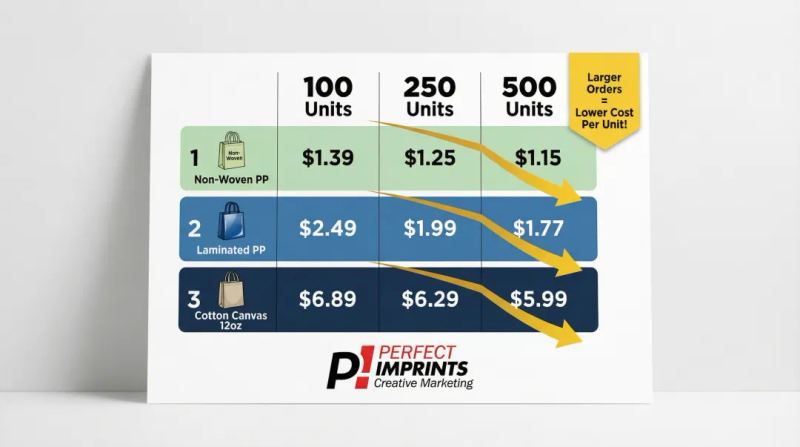
Order quantity directly impacts per-unit cost. Promotional distributors structure significant price breaks at 100, 250, 500, and 1,000 units. Non-woven PP and basic cotton totes offer the lowest cost-per-unit at large volumes (typically 500+), while canvas and laminated styles balance durability with moderate pricing at mid-range quantities (150-500). Zip-top canvas is best reserved for smaller, targeted VIP runs.
Typical pricing tiers:
| Material Type | 100 Units | 250 Units | 500 Units |
|---|---|---|---|
| Non-Woven PP | ~$1.39 | ~$1.25 | ~$1.15 |
| Laminated PP | ~$2.49 | ~$1.99 | ~$1.77 |
| Cotton Canvas (12oz) | ~$6.89 | ~$6.29 | ~$5.99 |
Budget tip: Factor in setup fees. Screen printing setup charges typically run $50-$55 per color, per location. Stick to 1-color, 1-location imprints for budget-sensitive mass giveaways.
Material and Durability Match
Material choice should align with expected usage. If the bag will be used once on the show floor, lightweight non-woven is sufficient. If the goal is post-event brand exposure through repeated daily use—grocery runs, commuting, gym trips—thicker cotton or canvas extends the bag's useful life and keeps your logo in circulation long after the show ends.
Material hierarchy:
- Non-woven PP: Budget baseline; single-event use
- Laminated PP: Mid-tier; moderate durability with premium appearance
- Cotton canvas: Premium; long-term daily carry with high retention rates
Capacity and Size for Your Booth Workflow
A standard 14-16" wide × 14-16" tall tote carries brochures flat and works for most booths. Bags under 13" feel limiting when fully loaded. Gusseted options add 3-4" of usable depth for kits.
Sizing guide:
- Standard flat tote (14-16"): Brochures, flyers, thin catalogs
- Gusseted totes (14-16" + 3-4" gusset): Notebooks, water bottles, multi-item kits
- Structured zip-top totes (15-18"): Tablets, larger swag items, executive gift sets
Pre-stuffing workflow: If you plan to pre-stuff bags with marketing collateral, assembly time varies based on the number of items per bag. Third-party fulfillment services offer kitting solutions, but pricing is quote-based and depends on assembly complexity.
Print Method Compatibility
Your print method must match both the design complexity and the bag material. Each option has a distinct use case — here's how they compare:
Print method comparison:
- Screen printing: Bold logos, 1-3 colors, high volume, budget-friendly
- DTG (Direct-to-Garment): Full-color designs, photo-realistic graphics, no setup fees for multiple colors
- Heat transfer: Complex designs, multiple colors, non-woven PP compatibility
- Embroidery: Premium finish, textured branding, structured canvas only (12-18 oz. minimum to prevent puckering)
Design Tips for Maximum Brand Visibility on the Show Floor
Trade shows are motion-heavy environments. Your logo must be readable in under one second while the bag is in motion. Fine text, long service lists, and complex graphics simply don't translate.
Core design principle: One primary mark—logo or icon—centered on the main front panel.
Placement dos and don'ts:
- ✅ Center logo on the main front panel
- ✅ Keep logo at least 25 mm below the top fold
- ✅ Maintain 15 mm clearance below handle eyelets
- ❌ Don't place artwork across structural elements
- ❌ Avoid logos that cross gusset folds
- ❌ Skip complex graphics that break readability when loaded
Back Panel Strategy
If printing the back, use only a secondary mark or a simple scannable QR code. The back panel gets less visibility and is often obscured by the wearer's body or other materials.
Color and Contrast
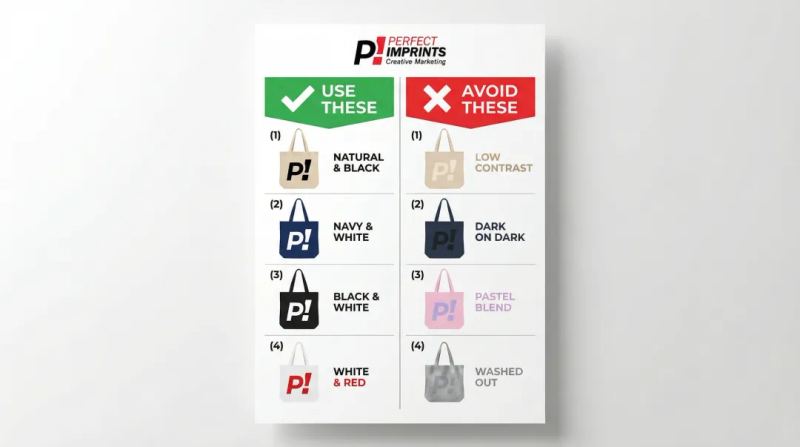
Placement decisions only matter if your imprint is actually visible. High contrast between the tote base color and imprint color is critical in indoor trade show lighting. Use the Pantone Textile Cotton eXtended (TCX) system for accurate fabric color reproduction, since colors shift when printed on cotton versus plastic or paper.
High-contrast combinations:
- Black logo on natural canvas
- White logo on navy or black bags
- Bold red or blue on white or light gray
- Avoid: Light colors on light bags, dark on dark, low-contrast pastels
How We Selected These Top Trade Show Tote Bags
We selected these tote bags based on four criteria: printability (how cleanly the surface accepts logo imprinting), durability for trade show use, cost-per-impression value at realistic order quantities, and how well each style serves a distinct booth scenario—from high-volume general handouts to executive VIP packages.
Common selection mistakes to avoid:
- Choosing a style based solely on looks without testing it with the actual contents it will carry
- Overlooking lead times for custom orders (standard production typically runs 5-10 business days after artwork approval)
- Ignoring the print method limits of each material type (for example, embroidery on lightweight non-woven PP won't work)
- Under-ordering without factoring in open-giveaway surges or last-minute booth traffic spikes
Ordering quantity and timing go hand in hand. While 24-hour rush production is available, it strictly limits decoration to 1-color/1-location and often excludes complex artwork. Finalize artwork and place orders at least 3-4 weeks pre-show to avoid expedited shipping costs and decoration restrictions.
Conclusion
The best custom branded tote bags for trade shows aren't the most expensive or the cheapest options—they're the ones that match booth workflow, audience expectations, and branding goals, and that get used long after the show ends.
Plan your order with realistic quantity buffers (add 15-30% for lead-based giveaways, 20-40% for open giveaways). Align material and print method to your specific giveaway scenario. A tote bag that survives the show floor and transitions to daily use delivers far more brand impressions than one that gets tossed at the hotel.
Visit Perfect Imprints to order custom logo tote bags across every style covered in this guide, with sourcing support tailored to your booth strategy.
Frequently Asked Questions
A standard 14–16" wide by 14–16" tall tote works for most trade show scenarios because it carries brochures flat and offers a reliable front print panel. Gusseted versions add 3–4" of depth for kits with notebooks, bottles, or multiple swag items.
Cotton canvas (10–12 oz.) is the most versatile material for durability and print quality, while non-woven polypropylene suits budget-driven high-volume orders. Choose canvas for repeat-use giveaways and non-woven poly when volume and cost are the priority.
For lead-based giveaways, plan for 1 bag per qualified conversation plus a 15–30% buffer. Open-floor giveaways need a 20–40% buffer above expected foot traffic. Most materials have minimum order quantities starting at 75–150 units.
Screen printing is the most cost-effective and visible method for bold logo-forward designs on fabric totes, with setup fees of $50–$55 per color. Embroidery is better for premium or zip-top structured styles where a refined finish matters.
Standard production lead times run 5–10 business days after artwork approval, plus 2–8 days for shipping. Order at least 3–4 weeks before your event to avoid rush fees, decoration restrictions, and stock availability issues.
Organic cotton, recycled PET, and recyclable non-woven totes demonstrate environmental commitment — a message that resonates strongly with healthcare, nonprofit, education, and government attendees. Sustainable products accounted for 13.77% of promotional industry sales in 2024, a 20% year-over-year increase.
Read Related Blogs
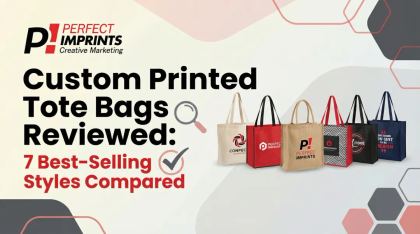
Custom Printed Tote Bags Reviewed: 7 Best-Selling Styles Compared
Compare 7 best-selling custom printed tote bag styles side by side. Find the right design, material, and print quality for your brand or event.
Custom Branded Merchandise Ordering Guide: Complete Guide
Master custom branded merchandise ordering with our complete guide. Plan orders, choose products, pick decoration methods, and avoid costly mistakes. Start today!
Custom Branding for Small Businesses: Complete Guide
Master custom branding for your small business. Build a strong visual identity, create branded materials, and maintain consistency on any budget. Start today!