Apr 3, 2026
Branded Drinkware Trends 2026: Sip in Style
Introduction
Branded drinkware has moved beyond being a simple promotional afterthought to become one of the most visible, high-retention marketing tools available. With 80% of consumers keeping custom drinkware for more than a year and each piece generating an average of 1,300 brand impressions over its lifetime, promotional drinkware delivers exceptional ROI.
In 2026, custom drinkware has become the rare promotional product that recipients actually reach for every day — driven by real improvements in function, sustainability, and design.
For businesses — from real estate firms to healthcare organizations — staying ahead of drinkware trends means making smarter promotional investments that generate real brand recall. The North American promotional products industry reached a record $27.7 billion in 2025, with branded drinkware commanding 10.4% of that market. When you invest in the right logo drinkware, you're not just handing out a freebie — you're creating a daily touchpoint that keeps your brand visible for years.
Key Takeaways
- Sustainability is baseline: Eco-materials like rPET, recycled stainless steel, and bamboo are now expected, not optional.
- Multifunctional design wins: Features like dual-lids, insulation tech, and collapsible forms separate premium from generic.
- Personalization drives brand recall: Full-wrap prints and laser-engraved logos turn drinkware into lasting brand touchpoints.
- Bold aesthetics matter: Muted earth tones and holographic finishes make drinkware statement pieces.
- Audience fit determines ROI: Drinkware matched to recipient lifestyle and industry gets used daily — keeping your brand front and center.
Trend 1: Sustainability First — Eco-Conscious Materials Are the New Standard
Sustainable drinkware has moved from "nice-to-have" to baseline expectation. 74% of consumers report a more favorable view of advertisers after receiving a sustainable promotional item, and 76% say sustainability influences whether they keep or use a product. In 2026, environmentally aware consumers and B2B buyers managing brand perception won't accept single-use plastics when durable, responsibly sourced alternatives are available.
Leading Sustainable Materials for 2026
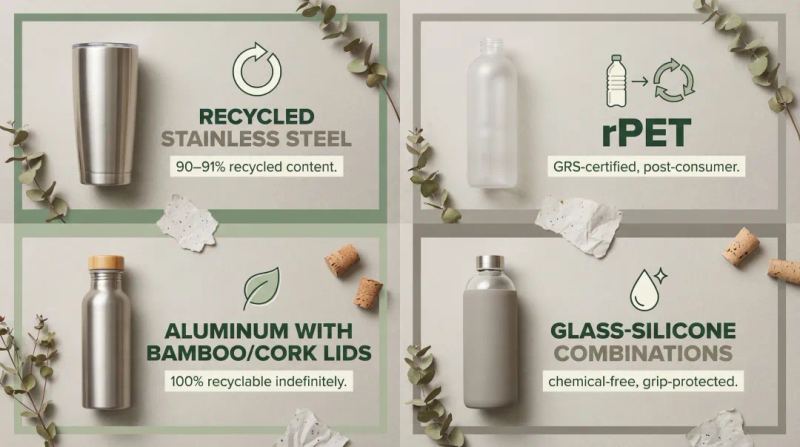
Four materials are driving the 2026 sustainable drinkware conversation:
- Recycled stainless steel — Premium suppliers now offer 90-91% recycled content, well above the US average of 71%. Durable, brandable, and long-lasting.
- rPET (recycled polyethylene terephthalate) — Repurposes post-consumer plastic bottles into lightweight drinkware. Look for GRS-certified products for third-party verification; many now pair with FSC-certified bamboo lids.
- Aluminum with bamboo or cork lids — 100% recyclable indefinitely, aluminum paired with natural lid accents communicates environmental values while keeping a premium look.
- Glass-silicone combinations — Chemical-free storage with silicone sleeves for grip and breakage protection. A strong choice for health-conscious or wellness-focused audiences.
Sustainability as Brand Signal
Gifting an rPET bottle or bamboo-lid aluminum bottle communicates corporate values without saying a word. When your client or employee uses that drinkware daily, they're reminded that your organization prioritizes environmental responsibility. Even more compelling: promotional products generate up to eight times less carbon impact per memorized impression than digital advertising like social media and online display ads, making sustainable drinkware both environmentally and marketing-efficient.
The sustainable promotional products segment reached an estimated $3.8 billion in 2025, representing 14% of total industry sales. For B2B buyers, that scale means more supplier options, better certification standards, and less risk of greenwashing — all of which make sustainable choices easier to justify internally.
Trend 2: Multifunctionality and Smart Drinkware Design
In 2026, buyers of branded drinkware are looking for versatility over single-use products. Basic 12oz cups are giving way to sophisticated designs that serve multiple purposes and adapt to different beverage needs throughout the day.
Multi-Purpose Design Features
3-in-1 functionality is gaining traction: tumblers that work as a standard tumbler, can cooler, and bottle cooler in one vessel. Dual-lid systems that shift between sipping and full-seal modes reduce spills during commutes while offering flexible drinking options. Collapsible bottles built for travel compress to pocket size when empty, then expand to full capacity when needed—perfect for field teams and outdoor professionals.
Innovative Lid Technology
Lid design has become a critical purchase driver. Push-top 360-degree mouth lids allow drinking from any angle without rotating the bottle. Spigot-style tops offer controlled pouring for shared beverages at events. Leak-proof twist systems with silicone gaskets prevent spills in bags and vehicles. For corporate buyers ordering custom drinkware for active employees or field teams, these lid innovations directly impact daily usability and retention rates.
The "Stanley effect" has permanently shifted expectations toward larger capacity custom drinkware (20–40oz) with integrated handles and straws. Loop handles and dual-lid designs (sip-and-chug) are now baseline features, not upgrades.
Advanced Insulation Technology
Double-wall vacuum insulation is now expected at the mid-to-premium price tier. Leading manufacturers set the performance benchmark, with beverages staying cold for up to 24 hours and hot for up to 12 hours. This matters most in sectors where employees are on the move all day:
- Healthcare & wellness: Staff need reliable temperature retention across long shifts
- Construction & field teams: Hot coffee stays hot, cold water stays cold outdoors
- Corporate gifting: Premium insulation signals quality to recipients
Smart Drinkware Emergence
The smart water bottle market is projected to grow from $3.2 billion in 2026 to $8.9 billion by 2036, a 10.7% compound annual growth rate (CAGR). These connected devices feature hydration reminders, built-in temperature indicators, and app connectivity for tracking water intake.
Still an early-stage category, smart bottles are gaining ground in corporate wellness programs and executive gifting. Brands like LARQ and HidrateSpark now offer corporate gifting programs with custom logo integration on their premium smart bottle lines.
Trend 3: Deep Personalization and Custom Decoration Techniques
Generic logo slaps are losing impact. In 2026, recipients expect branded drinkware to feel intentional and personal. A promotional product has roughly five seconds to win space in someone's life or end up in the trash—and personalization significantly increases retention.
Key Decoration Methods for 2026
Each decoration method suits different brand goals and budgets. Here's how they compare:
- Full-wrap printing — Digital UV printing covers the entire vessel in full CMYK color with optional 3D contour textures. Best for event giveaways and campaigns where visual impact drives pick-up rates.
- Laser engraving — Concentrated light cuts permanent cavities into the surface. No color or gradients, but the clean, permanent finish won't fade or peel — ideal for executive gifts and powder-coated stainless steel.
- Color imprinting and ceramic coating — Vibrant, durable options well-suited for healthcare and education brands that need bright, consistent color. Screen printing works best for 1-2 spot colors with rich saturation.
- Individual name engraving — 48% of consumers find personalized items more memorable, and 68% view advertisers more favorably when receiving them. A recipient's name turns a branded item into a keepsake.
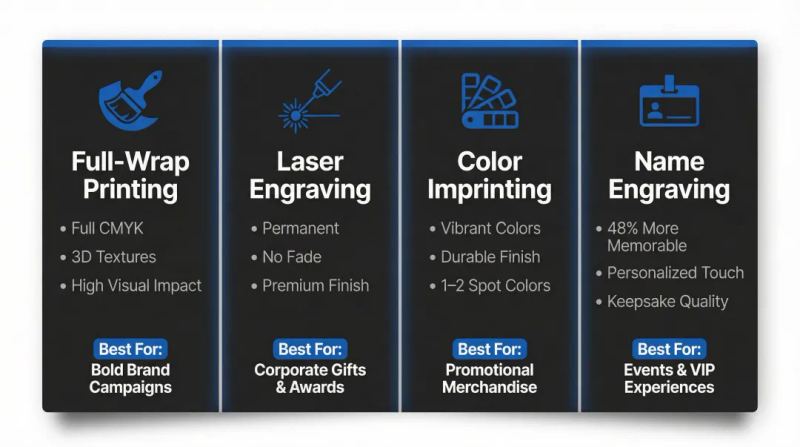
Perfect Imprints offers all four decoration methods across its drinkware catalog, so whether you're ordering 50 engraved tumblers for a client appreciation event or 500 full-wrap bottles for a trade show, the right technique is already in the mix.
Trend 4: Bold Aesthetics — Colors, Textures, and Statement Shapes
Design is the ultimate dealbreaker: 90% of consumers say design plays a role in their decision to keep a product. 2026 drinkware aesthetics are pulling in two simultaneous directions, each serving different brand personalities.
Color Palette Directions
Muted earth tones—taupe, sage, warm beige, and Pantone's 2025 Color of the Year "Mocha Mousse"—signal sustainability and calm sophistication. These colors appeal to wellness brands, healthcare organizations, and companies positioning themselves as environmentally conscious and approachable.
Bold, attention-grabbing finishes like metallic holographic effects and high-gloss full-color wraps create statement pieces for high-visibility campaigns. Iridescent and holographic finishes reflect a full spectrum of color, giving custom artwork extra depth and movement—perfect for events, festivals, and brands targeting younger demographics.
Tactile Textures and Distinctive Shapes
Consumers judge value by touch: 70.4% cite durability and 58% cite material quality as value indicators. Powder coating fortifies metal drinkware with weather-resistant, tactile finishes that feel premium in hand. Dimpled surfaces and spiral-inspired contours make drinkware recognizable by feel as well as sight. Soft-touch silicone grips add comfort and slip resistance.
These unusual shapes and textures increase the likelihood recipients will keep and use the item. When drinkware feels distinctive, recipients integrate it into their daily routine rather than setting it aside after the first use.
Ergonomic Design Elements
Features once exclusive to consumer retail are now standard expectations in branded merchandise. The right ergonomic details make drinkware something people reach for every day — not just once:
- Contoured handles that fit comfortably in hand, reducing fatigue during long meetings or commutes
- Slip-resistant bases that prevent desk spills in office environments
- Cup-holder-compatible proportions sized for commuters and travelers
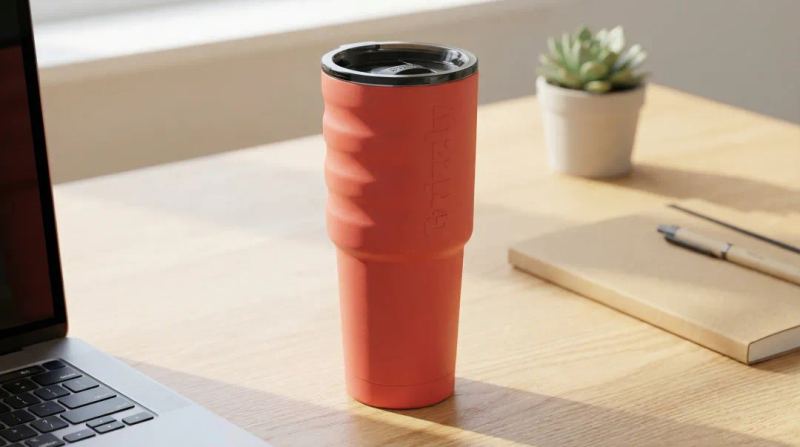
Each of these details signals quality at first touch, which is exactly when brand impressions are formed.
What's Driving These 2026 Branded Drinkware Trends — and What It Means for Your Brand
Three converging forces are reshaping the branded drinkware landscape:
Consumer values shift: Buyers and employees increasingly evaluate brands by their sustainability commitments. When 74% of consumers favor advertisers who provide sustainable promotional items, choosing eco-conscious drinkware becomes a strategic brand positioning decision, not just a product choice.
Social media and the "lifestyle accessory" effect: The Stanley Quencher phenomenon—which generated 6.7 billion TikTok views and propelled Stanley's revenue from $74 million to $750 million—proved that drinkware is now a cultural symbol. Platforms like TikTok and Instagram have raised aesthetic and quality expectations even for branded items. Recipients compare promotional drinkware to the $30-$50 retail bottles they use daily.
The premium gifting shift: Corporate gifting budgets are consolidating around fewer, higher-quality items that recipients actually use. When budgets tighten, 60% of buyers cut quantity first, while only 11% reduce customization. Organizations recognize that one premium, personalized tumbler generates more brand value than ten generic plastic cups.
Practical Decision Framework
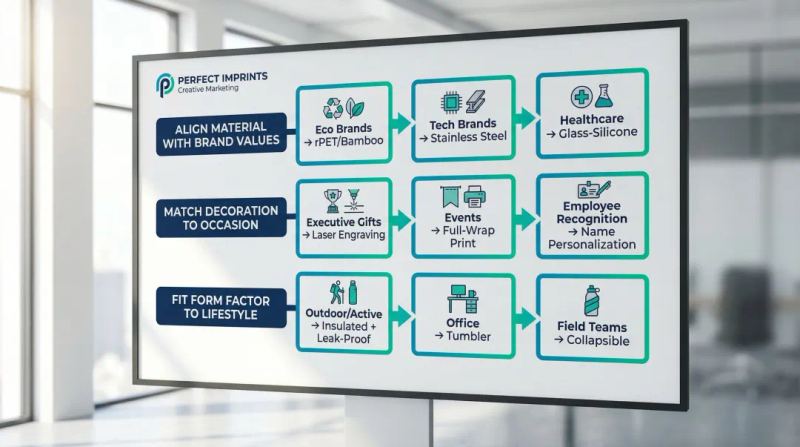
These forces create a clear decision framework for choosing 2026 branded drinkware:
Align material with brand values: Eco-conscious brands should prioritize rPET or bamboo-accented options. Tech companies often lean toward sleek stainless steel. Healthcare organizations benefit from glass-silicone combinations that emphasize purity.
Let the occasion drive decoration depth: Executive gifts warrant laser engraving for premium permanence. Event giveaways benefit from full-wrap prints that maximize visual impact. Employee recognition programs gain emotional resonance through individual name personalization.
Match form factor to recipient lifestyle: Outdoor and active audiences need insulated bottles with leak-proof lids and handles. Office-based recipients prefer tumblers that fit desk cup holders and keep coffee hot through long meetings. Field teams value collapsible or multi-functional designs.
Looking Forward
For the next 1-3 years, watch for app-connected smart bottles entering the mainstream branded space, expanded use of certified sustainable materials with traceable sourcing, and hyper-personalized drinkware powered by on-demand printing platforms. Planning 2026 campaigns early — and working with a supplier experienced in sustainable sourcing and custom decoration — means better access to trending inventory before peak demand hits. Perfect Imprints can help match the right materials, decoration methods, and form factors to your audience and budget.
Frequently Asked Questions
Insulated tumblers with handles, rPET bottles with bamboo lids, and multifunctional dual-lid designs lead the market. Sustainability expectations and individual personalization are the two forces shaping what sells heading into 2026.
Brand design is moving toward full-wrap digital prints, laser engraving, and individual name personalization. Color palettes shift between muted earth tones (Mocha Mousse, sage, taupe) and bold holographic or iridescent treatments, depending on brand voice and target audience.
Laser-engraved insulated tumblers and stainless steel bottles are the go-to for executive gifting. Double-wall vacuum insulation and permanent personalization keep your brand visible long after the event ends.
Recycled stainless steel, rPET, aluminum with bamboo accents, and glass-silicone combinations lead the market. These materials are driven by sustainability expectations, durability demands, and consumer preference for eco-conscious brands.
Common methods include screen printing (for 1-2 spot colors), laser engraving (permanent, premium finish), full-wrap digital UV printing (photorealistic color), and ceramic coating (vibrant, durable). Choice depends on the material, occasion, and desired visual effect.
Insulated stainless steel tumblers and double-wall water bottles rank as the top-performing styles. They get used daily, offer large imprint areas, and hold temperature well — making them reliable choices for corporate branding.
Read Related Blogs
Top Durable Branded Drinkware Options for Corporate Giveaways in 2026
Discover top durable branded drinkware for corporate giveaways in 2026. Compare tumblers, bottles, and mugs to maximize brand visibility and ROI.
Top Employee Appreciation Gift Ideas for 2026
Discover top employee appreciation gift ideas for 2026 that boost morale and retention. Find meaningful, creative gifts your team will love this year.