Apr 3, 2026
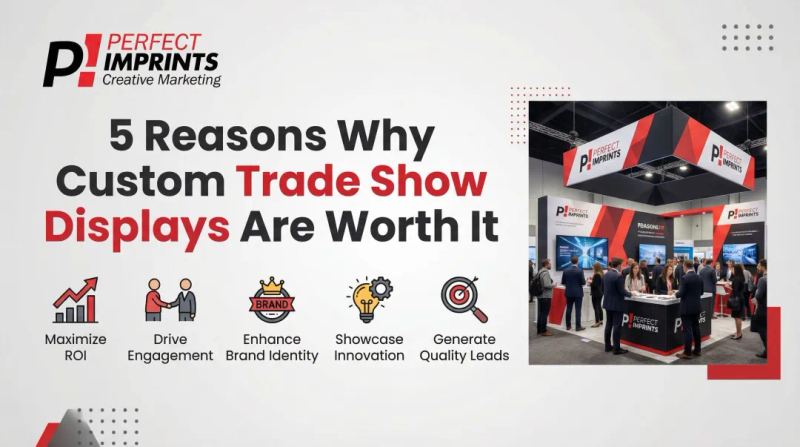
5 Reasons Why Custom Trade Show Displays Are Worth It
Introduction
Trade show floors are intensely competitive environments where hundreds of booths compete for the same pool of attendees. Research shows that attendees make booth entry decisions in just 3.2 seconds based on visual processing alone, which means your display is your first—and sometimes only—sales tool.
Many businesses default to generic, pre-built booth options to save on upfront costs—without realizing what they're sacrificing in brand impact, lead quality, and ROI.
The difference between a custom display and a standard rental often determines whether your team spends the day in meaningful sales conversations or watching attendees walk past.
This post breaks down 5 practical reasons why investing in a custom trade show display consistently outperforms the generic alternative.
Key Takeaways
- Custom displays give you full control over brand presentation in high-stakes environments.
- They attract more qualified attention and generate better leads than standard booths.
- Designed for reuse across multiple events, reducing cost-per-show over time.
- Generic booths fade into the background — custom displays make your brand the one people remember.
- The right display builds instant credibility and helps staff turn booth visitors into qualified leads.
What Are Custom Trade Show Displays?
Custom trade show displays are purpose-built booth structures designed around a company's brand identity, goals, and booth space—as opposed to rented or pre-fabricated generic setups. They are used at trade shows, expos, industry conferences, and other live events where brands compete for foot traffic and face-to-face engagement.
That definition only tells part of the story. In practice, a custom display functions as an extension of your marketing strategy—built to deliver measurable outcomes like lead capture, brand recall, and sales conversations.
Unlike rental booths that look identical to dozens of others on the floor, custom displays translate your unique value proposition into a three-dimensional experience that attendees remember long after the event ends.
5 Reasons Custom Trade Show Displays Are Worth the Investment
Reason 1: They Make Your Brand Instantly Recognizable in a Crowded Room
Brand differentiation is tough on a trade show floor, where dozens of booths may sell similar products or services. Custom displays solve this by translating your brand identity—colors, logo, messaging, visual tone—into a three-dimensional experience that attendees register the moment they enter the hall.
Custom booths create visual cohesion that attendees process unconsciously: consistent color schemes, branded signage, and intentional layout signal professionalism and reinforce memory. Generic booths communicate nothing unique about who you are, leaving attendees with no visual anchor to remember you by after they've walked past 50 other exhibitors.
Why this is an advantage:
Brand recognition at trade shows directly impacts lead quality. Consistent branding across physical displays boosts brand recall by 80%, and attendees who feel they "know" a brand before speaking to staff are more likely to engage meaningfully and follow up afterward. The "mere exposure effect" demonstrates that repeated brand encounters at trade shows increase positive feelings and build brand recognition, making visitors more likely to buy.
This advantage compounds across every show your display appears at. Unlike a forgettable generic booth that resets to zero each time, a custom display builds brand awareness that accumulates with each event.
KPIs impacted:
- Brand recall rate
- Booth visit rate
- Post-show follow-up conversion
- Social media mentions during the event
When this advantage matters most: Industries where multiple competitors exhibit at the same shows—healthcare, real estate, financial services, education—where visual differentiation can be the deciding factor between a conversation and a pass-by.
Reason 2: They Drive Higher Attendee Engagement and Better-Quality Leads
Custom displays are designed with intentional flow and interactive elements—product demo zones, branded touchpoints, and strategic placement of staff interaction areas—which guide visitors through a purposeful experience rather than leaving them to wander aimlessly.
Layout optimization matters more than most exhibitors realize. Placing high-interest products at entry points, creating space for private conversations, and incorporating interactive screens or displays increases dwell time and the depth of interaction—both of which are leading indicators of lead quality.
Why this is an advantage:
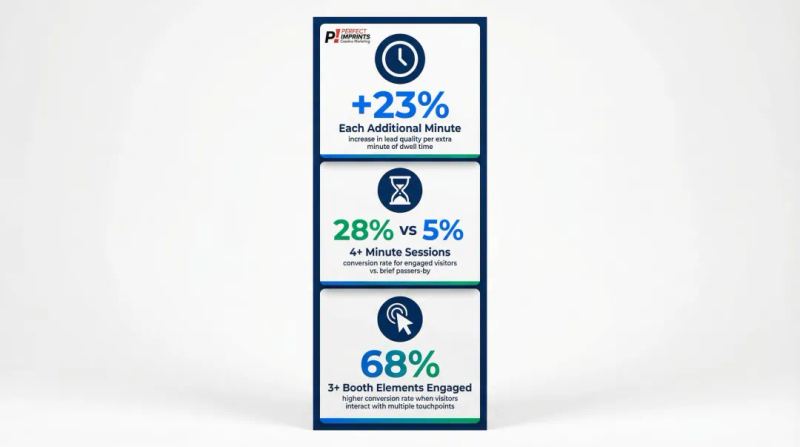
The connection between time spent at a booth and conversion likelihood is direct and measurable. Each minute of dwell time increases lead quality by 23%, and sessions lasting over 4 minutes convert at 28%, compared to just 5% for shorter interactions. Visitors engaging with 3+ booth elements have 68% higher conversion rates.
Standard booths, by contrast, use fixed layouts that prevent exhibitors from guiding visitor flow or creating experiences tailored to their specific sales process. You're stuck with whatever configuration the rental company provides, regardless of whether it matches how your team actually sells.
KPIs impacted:
- Average dwell time per visitor
- Leads collected per show
- Lead-to-opportunity conversion rate
- Product demo requests
When this advantage matters most: Companies with complex products or services that require explanation before purchase—construction, healthcare tech, banking software—where a quick conversation isn't enough and booth design needs to do some of the pre-selling work.
Reason 3: They Can Be Adapted and Reused Across Multiple Events
Well-designed custom displays are built modularly, meaning components can be reconfigured, swapped, or scaled depending on booth size, event focus, or audience. The initial investment works across multiple shows without starting from scratch each time.
In 2024, U.S. event marketers planned to exhibit at an average of 42.4 regional, 12.5 national, and 5.1 international in-person trade shows. For companies exhibiting that frequently, adaptability isn't a luxury—it's a necessity.
This adaptability also includes updating graphics and messaging without rebuilding the entire structure, which keeps branding current at a fraction of the replacement cost. Graphics typically require replacement every 12 to 18 months, but the structural framework lasts much longer.
When this advantage matters most: Companies that exhibit more than once or twice per year, or that target different audiences at different events—such as a healthcare company attending both a patient-facing expo and a B2B medical conference.
Supporting materials like custom table covers, retractable banners, and branded promotional products can be mixed and matched to refresh your booth's look without replacing the core structure—Perfect Imprints offers all of these alongside its trade show display lineup.
Reason 4: They Deliver Better Long-Term Cost Efficiency Than Generic Alternatives
Custom displays appear more expensive upfront, but when costs are calculated over multiple uses—versus repeatedly renting generic booths, paying for modifications, or replacing low-quality pre-built structures—custom options typically cost less per show over time.
The "rule of threes" dictates that when an exhibit will be reused three or more times in the same configuration, purchasing becomes more cost-effective than renting. Most custom trade show exhibits are designed to last 5–7 years with regular care and maintenance, while rental fees accumulate with no equity built.
High-quality materials used in custom displays are built for durability across repeated setup and teardown cycles, reducing replacement and repair frequency. Modular island exhibits weigh 61% less than traditional custom island exhibits, significantly reducing shipping and drayage costs—hidden expenses that quickly add up with heavier rental structures.
Cost comparison context:
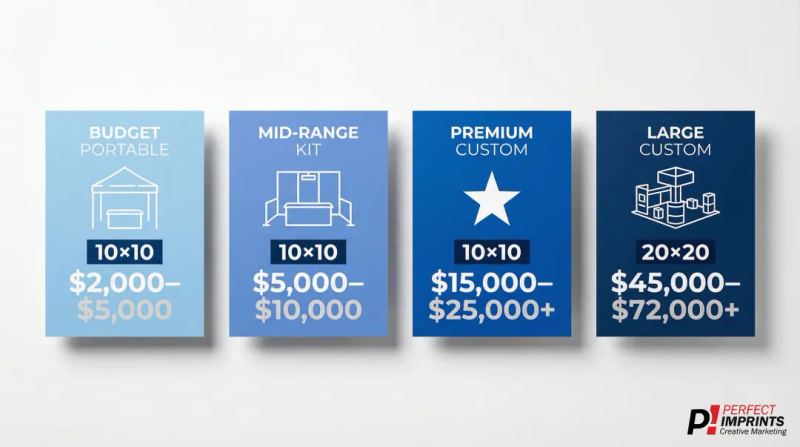
| Booth Type | Size | Estimated Price Range |
|---|---|---|
| Budget Portable | 10×10 | $2,000 – $5,000 |
| Mid-Range Kit | 10×10 | $5,000 – $10,000 |
| Premium Custom | 10×10 | $15,000 – $25,000+ |
| Large Custom | 20×20 | $45,000 – $72,000+ |
KPIs impacted:
- Cost-per-show
- Cost-per-lead
- Total trade show marketing spend over 2–3 years
Reason 5: They Signal Credibility and Reflect the Quality of Your Business
Attendees form quick impressions about a company's quality, stability, and professionalism based on booth appearance. Research indicates that 83% of trade show attendees form opinions about a company based on the quality of its booth. A polished, well-branded custom display signals investment and seriousness, while a generic or visually inconsistent booth can imply the opposite.
This psychology matters most in industries where trust is a prerequisite before any business conversation can happen—banking, non-profits seeking donors, healthcare providers, government contractors. In these sectors, a professional first impression isn't just nice to have; it's mandatory.
The physical environment also affects staff morale and confidence. Representatives standing in a well-crafted, branded booth tend to present and engage with more confidence than those in a makeshift setup. Body language accounts for 55% of communication impact, and the physical space directly affects how staff carry themselves.
Booth aesthetics also shape how visitors feel about your brand after they leave. A clean, visually calm display—one that avoids excessive text or layered messages—signals that you know exactly what you want to communicate. Complexity creates friction; simplicity builds confidence and drives the word-of-mouth that follows attendees home.
What Happens When You Skip Custom Displays
Defaulting to a generic display means blending into a sea of identical booths. Fewer visitors stop, conversations run shorter, and lead counts drop — not from a weak product, but from a presentation that never earns a second glance.
The compounding problem is harder to see on a spreadsheet: every show where a brand fails to make an impression is a missed opportunity to build the market familiarity that makes future events easier. Generic booths don't accumulate brand equity. You're starting from zero at every event.
Most companies overlook the hidden costs:
- Frequent rental fees that exceed custom display costs over time
- Last-minute graphic patches that look unprofessional
- Staff frustration with poor layouts that don't support their sales process
- Inability to differentiate from competitors using the same rental templates
- High navigation friction—caused by cluttered pathways or unclear signage—correlates with 30-50% lower engagement
That last point connects to a layout problem generic booths create by default. When fixed configurations force too many kiosks along the aisle — what exhibit designers call the "castle effect" — the booth creates a physical and psychological barrier. Visitors perceive the space as closed off and keep walking. Custom displays solve this by allowing open, inviting configurations that pull people in rather than block them out.
How to Get the Most Out of Your Custom Trade Show Display
A custom display works best when it's built around specific, measurable goals—not just looks. Before ordering, businesses should define what success means at each show: leads collected, demos completed, partnerships started. Let those goals guide design choices.
Pair the custom display with branded supporting materials that echo the same visual identity across the booth space:
- Custom table covers (fitted, throws, or runners)
- Retractable banner stands with consistent messaging
- Promotional giveaways that extend your brand beyond the booth
- Branded signage that guides visitor flow
Perfect Imprints carries branded materials across all these categories, making it easy to source everything from one supplier and keep a consistent look throughout your booth.
Once you have that cohesion locked in, treat the display as a long-term asset:
- Review its performance after each show
- Update graphics when messaging changes (typically every 12-18 months)
- Reconfigure layouts based on what drove the most engagement at previous events.
- Track KPIs like dwell time, leads collected, and conversion rates to measure ROI.
Trade shows deliver an average of $20.98 for every $1 spent, but only when the booth itself is designed to maximize that return. A well-maintained custom display compounds that return across every show on your calendar.
Conclusion
Custom trade show displays aren't just a design preference — they're a measurable business investment that impacts brand recognition, lead quality, cost efficiency, and professional credibility every time a company steps onto a show floor.
For businesses that exhibit regularly or plan to, a custom display isn't a luxury. It's the difference between a booth that gets walked past and one that pulls people in, starts conversations, and generates leads worth following up on.
Whether you're exhibiting once a year or building a full trade show calendar, working with a promotional products partner like Perfect Imprints means your display, signage, and branded materials can all work together as a cohesive system — not a patchwork of last-minute purchases.
Frequently Asked Questions
Costs vary widely based on size, materials, and customization level—from a few hundred dollars for simple portable displays to tens of thousands for large custom exhibits. Custom displays, while higher upfront, typically offer better cost-per-show value over time compared to repeated generic rentals.
A good display combines consistent branding, clear messaging readable from a distance, and an intentional layout that draws visitors in. Quality materials and interactive elements reinforce credibility and give attendees a reason to stop.
The biggest mistakes are ignoring foot traffic patterns when selecting your location and showing up with generic, visually inconsistent materials. Both undermine your brand before a single conversation starts. Brief your staff on engagement goals ahead of time, too.
Yes. Most custom displays use modular components that reconfigure for different booth sizes, with swappable graphics to keep messaging current. For frequent exhibitors, this makes them far more cost-effective than renting each time.
Production timelines vary by complexity—simple custom displays may take 2–4 weeks, while larger or more complex builds can take 6–12 weeks. Build in extra lead time for revisions, approvals, and shipping—rushing the process rarely ends well.
Standard booths are pre-built, generic structures with limited branding options. Custom displays are built around a specific brand's identity and goals, producing a more deliberate, recognizable presence at any event.
Read Related Blogs
Best Custom Branded Tote Bags for Trade Shows: Complete Guide
Discover the best custom branded tote bags for trade shows. Compare top styles, materials, and design tips to maximize brand visibility on the show floor.
Custom Printed Tote Bags Reviewed: 7 Best-Selling Styles Compared
Compare 7 best-selling custom printed tote bag styles side by side. Find the right design, material, and print quality for your brand or event.

9 Affordable Trade Show Giveaways That Drive Lead Capture
Discover 9 affordable trade show giveaways that actually capture leads. Learn which promotional items drive engagement and maximize your event ROI.